In summary
- Fish had become trapped in an overflow basin at Trews Weir following recent storm activity
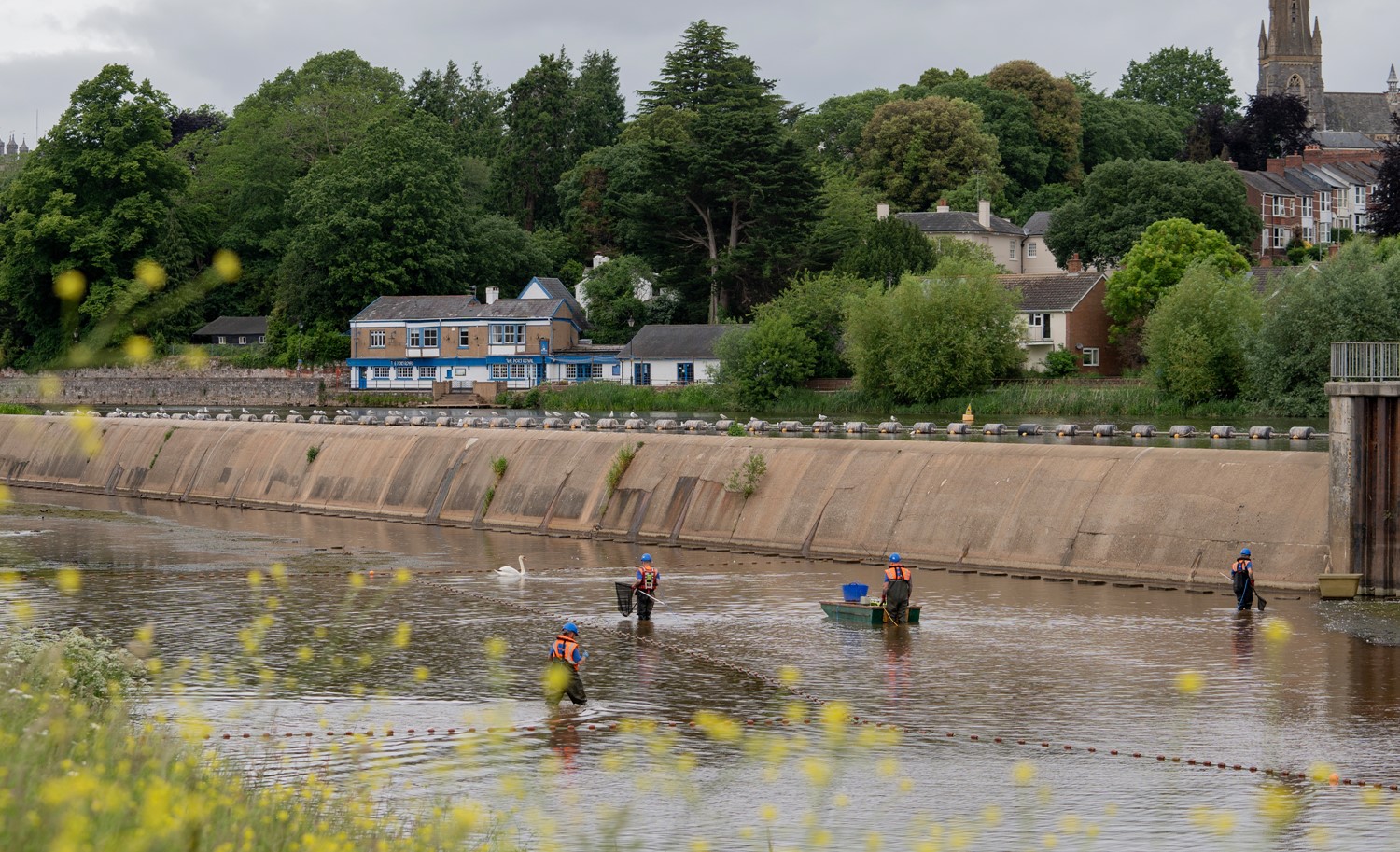
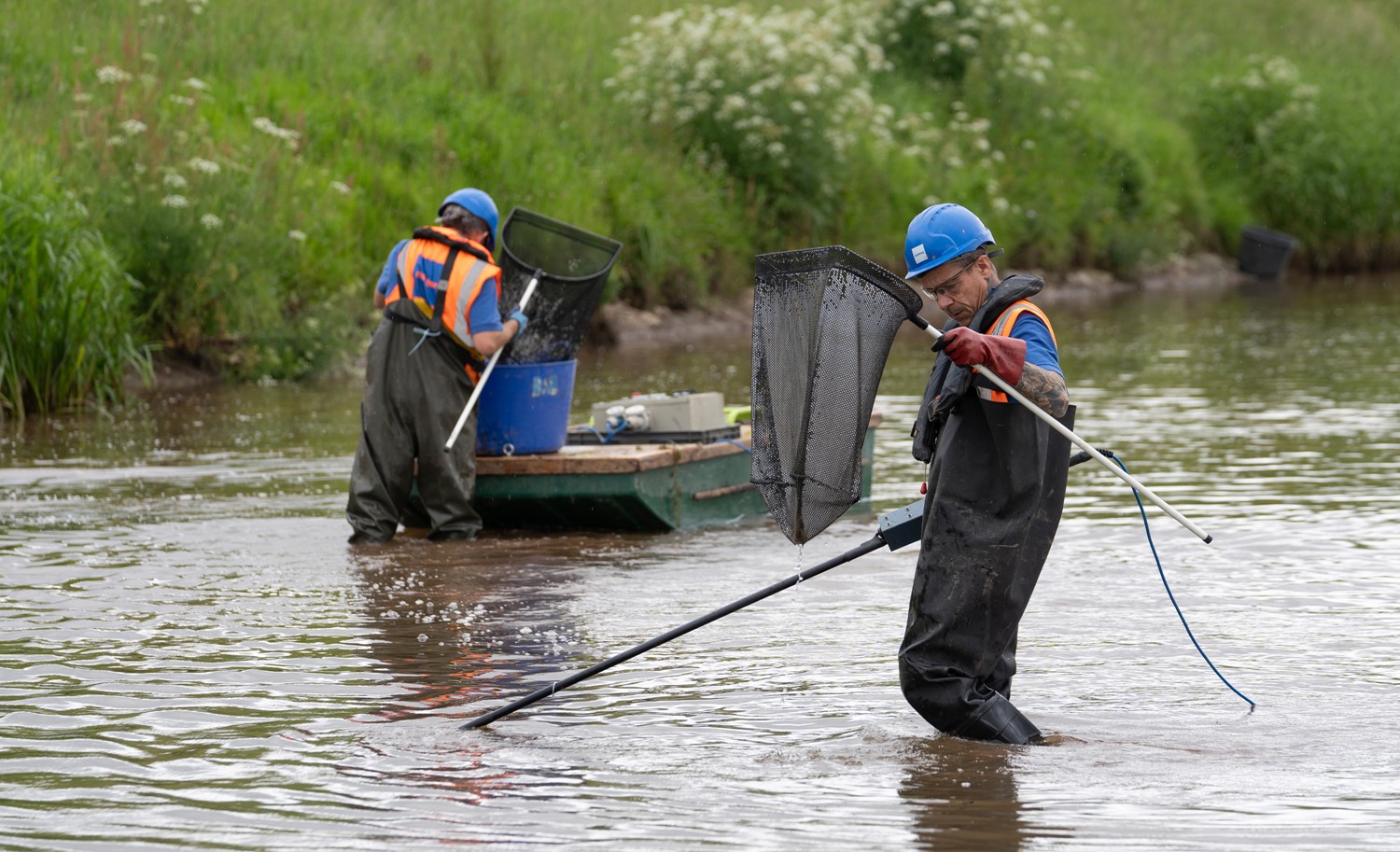
- Our team used phased electrofishing and seine netting to relocate species safely into the main river
- The relocation supported scheduled desilting works and protected local biodiversity

Project in numbers

15+ species relocated
1,800+ fish safely transferred
The need

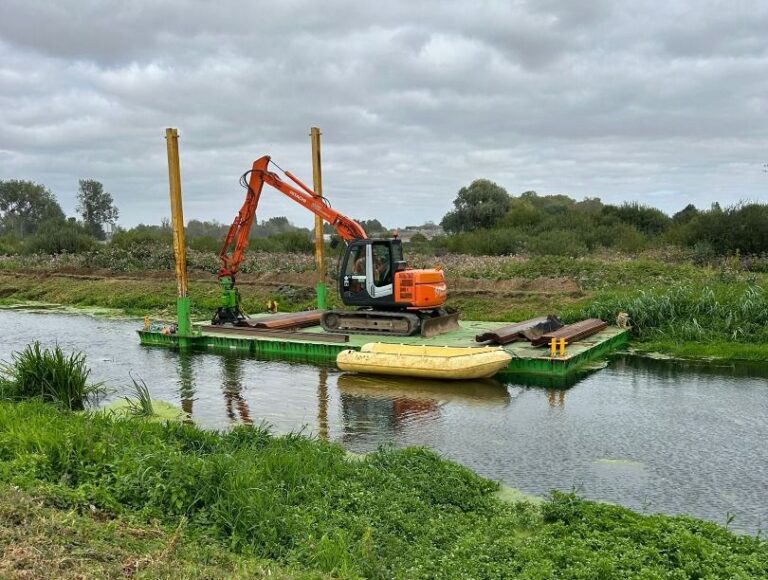
Trews Weir, located on the River Exe in Exeter, includes a fish pass that allows some species to return upstream following high flows. However, many fish remained trapped in the site’s overflow basin after a recent flood event.
With scheduled desilting due to begin, a full fish relocation was required to ensure the basin could be dewatered without causing harm to the fish population.
The solution

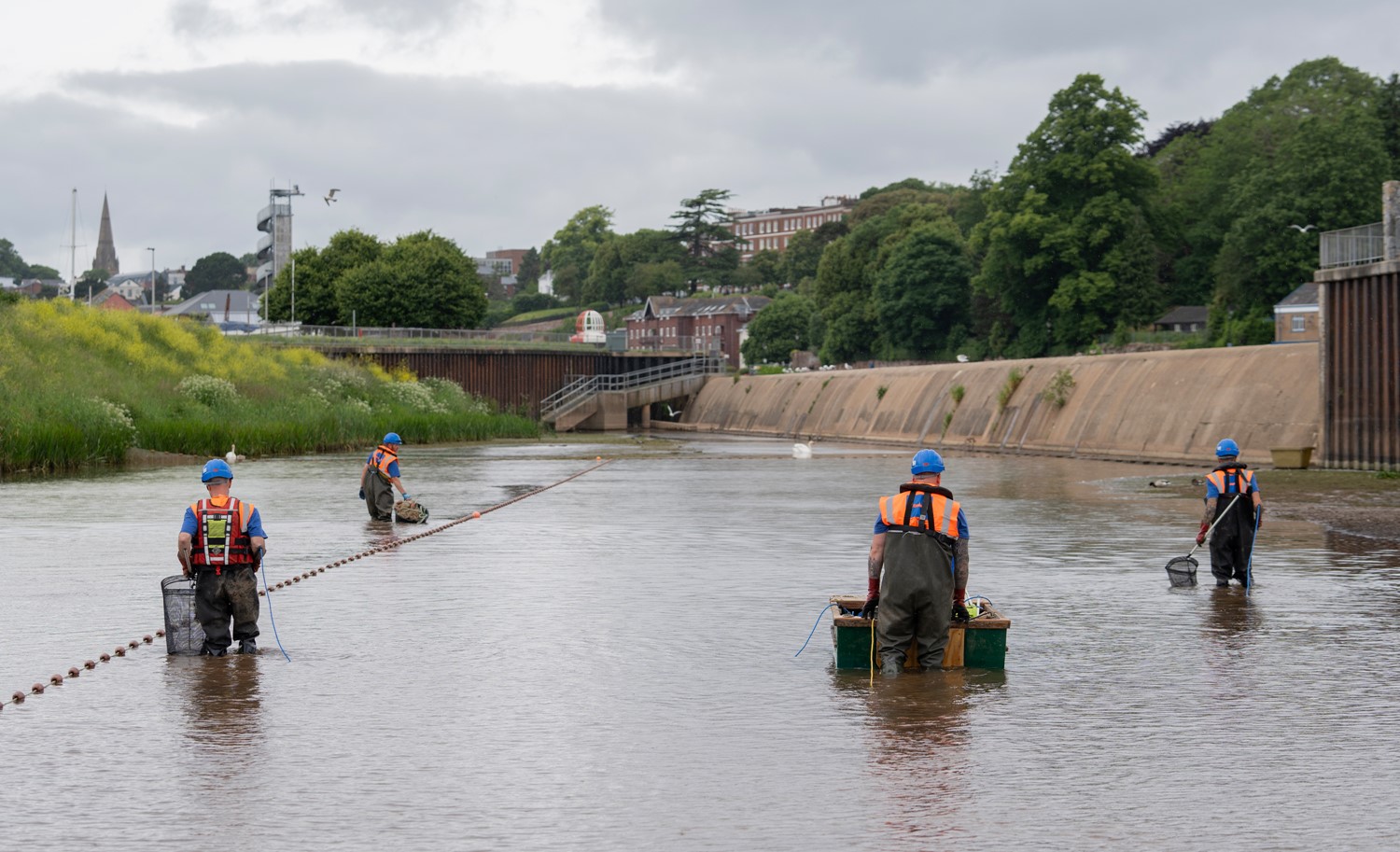
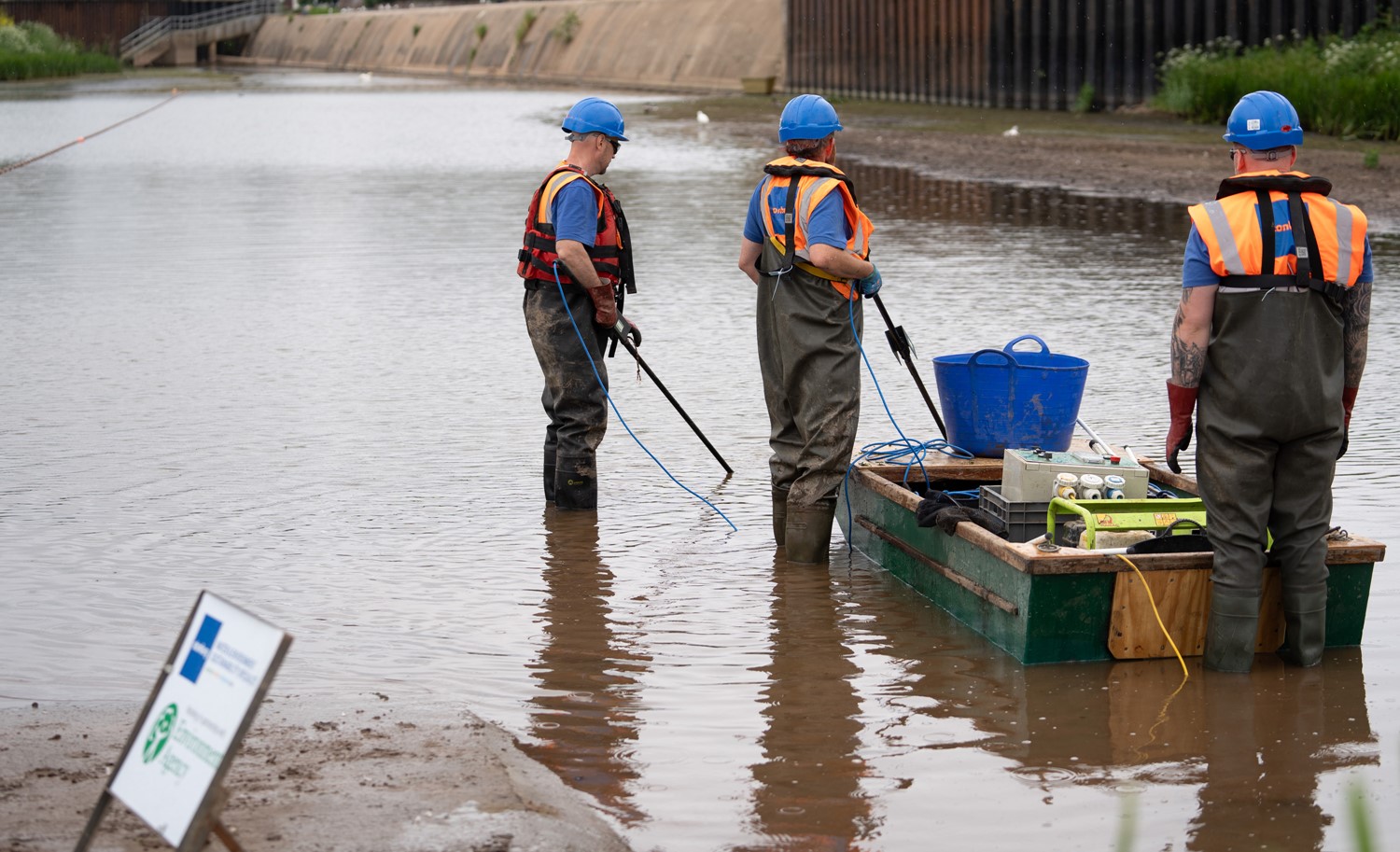
Working under the AOMR framework, our team installed seine nets to section off the working area and carried out
phased electrofishing.
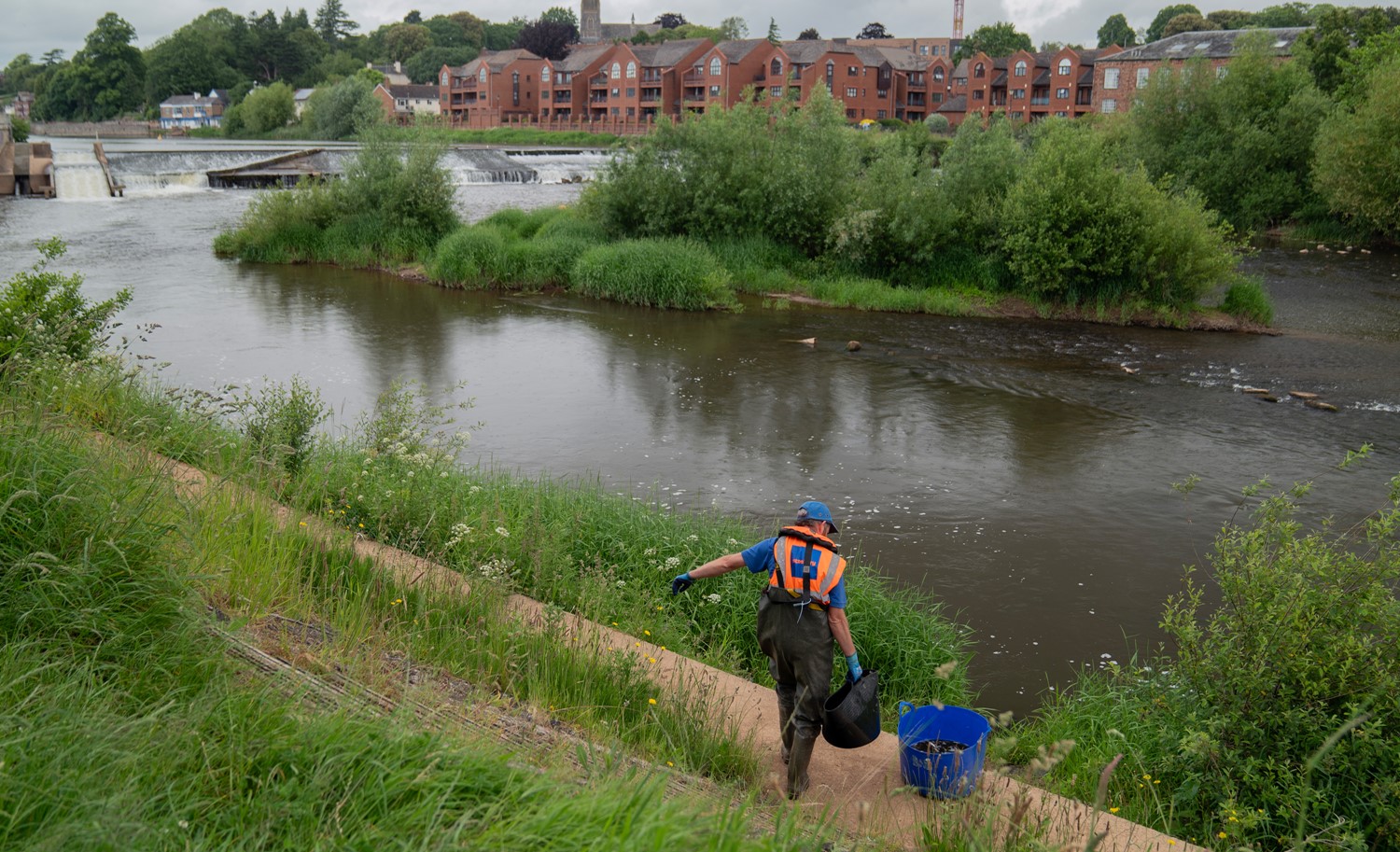
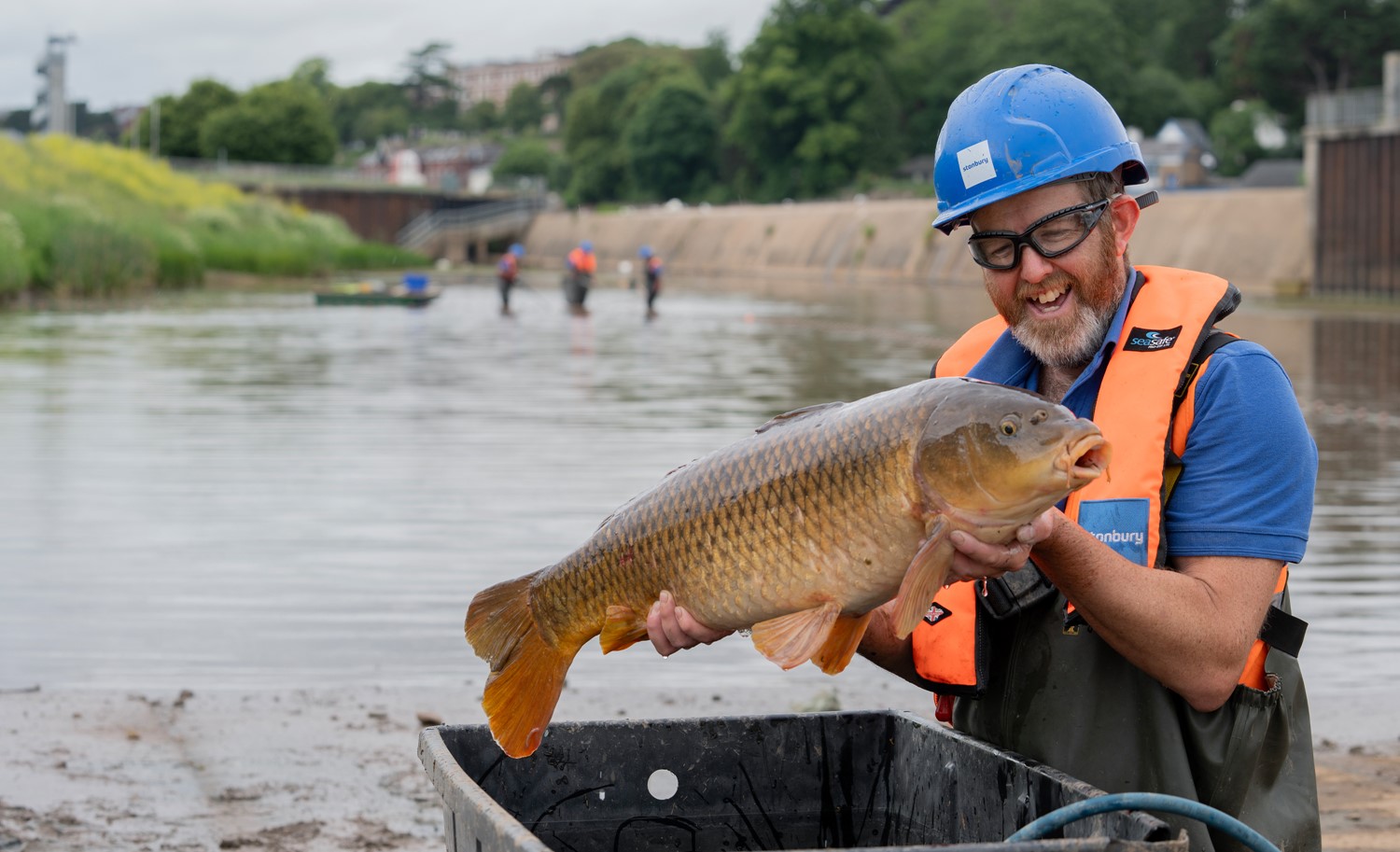
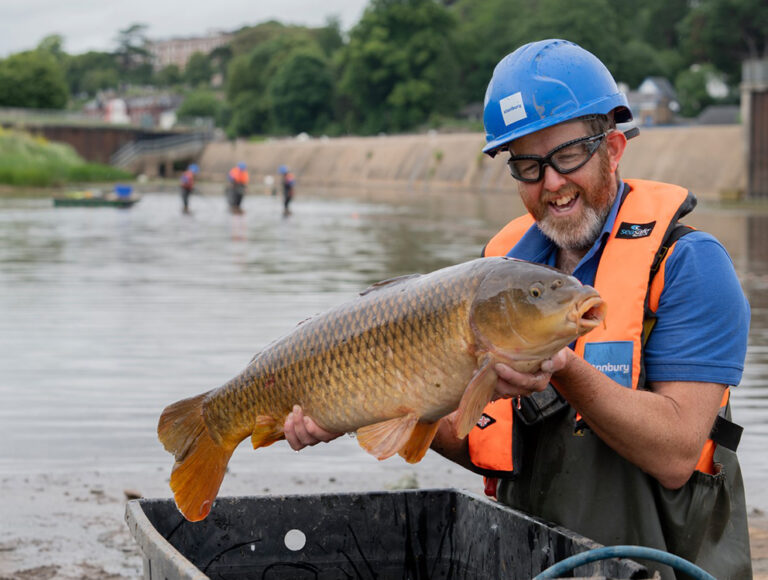
Each pass allowed fish to be collected and moved into an oxygenated holding tank to recover, before being returned to the main river channel downstream. The process was repeated until no further fish were observed.
A wide variety of species were relocated, with species and quantities recorded as the team were working. This included pike, flounder, perch, chub, roach, rudd, gudgeon, carp, brown trout, bream, tench, stone loach, bullheads, sticklebacks, and large numbers of eels and lamprey.
When dewatering exposed the excess sediment, the team continued to rescue as many protected eels and lampreys
as possible.
Biosecurity protocols were in place and followed stringently throughout. At the end of each shift, PPE and equipment
were checked, cleaned, dried, and all nets were disinfected
in Virkon S.
The benefits

- Protected native and migratory fish populations ahead of basin maintenance
- Enabled desilting works to proceed safely and in line with environmental best practice
- Delivered a successful fish rescue under the AOMR framework