In summary
- An over-wide, straightened chalk stream designated as a Site of Special Scientific Interest (SSSI) had sluggish flows, sediment build-up and poor salmonid spawning grounds
- Restoration works narrowed the channel, re-profiled banks, and created marginal berms using locally sourced woody material and flint
- The project improved biodiversity and ecological resilience while maintaining angler access along the channel

Project in numbers

4,500 The amount of material moved in m²
3 Marginal berms created
The need

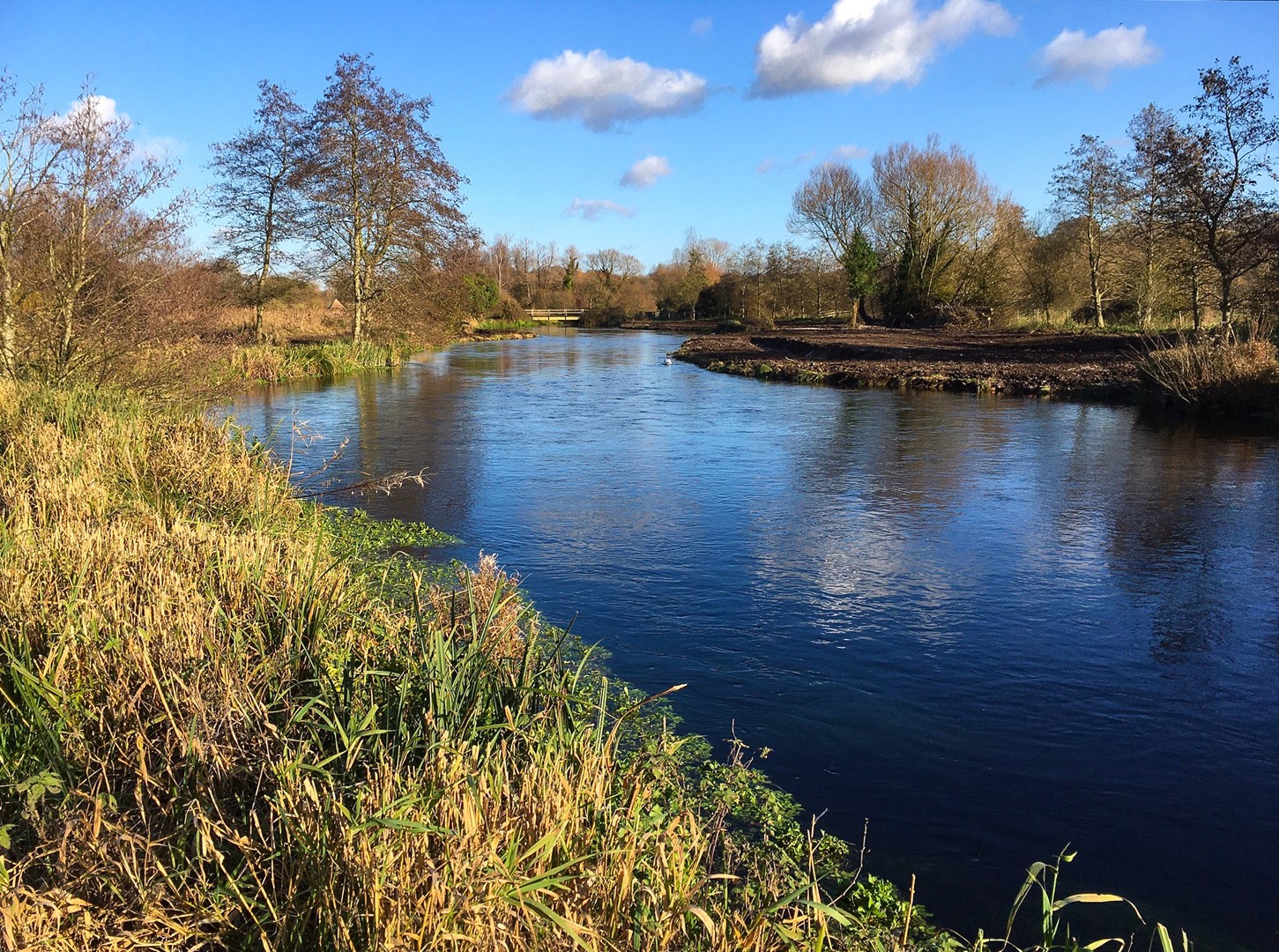
A chalk stream – designated as a Site of Special Scientific Interest (SSSI) – had become over-wide and artificially straightened, creating sluggish and uniform flows.
This caused sediment to build up on the bed, covering valuable salmonid spawning gravels and limiting the range of aquatic vegetation associated with SSSI status.
The channel was also vulnerable to habitat degradation during drought periods, creating an urgent need for restoration.
The solution

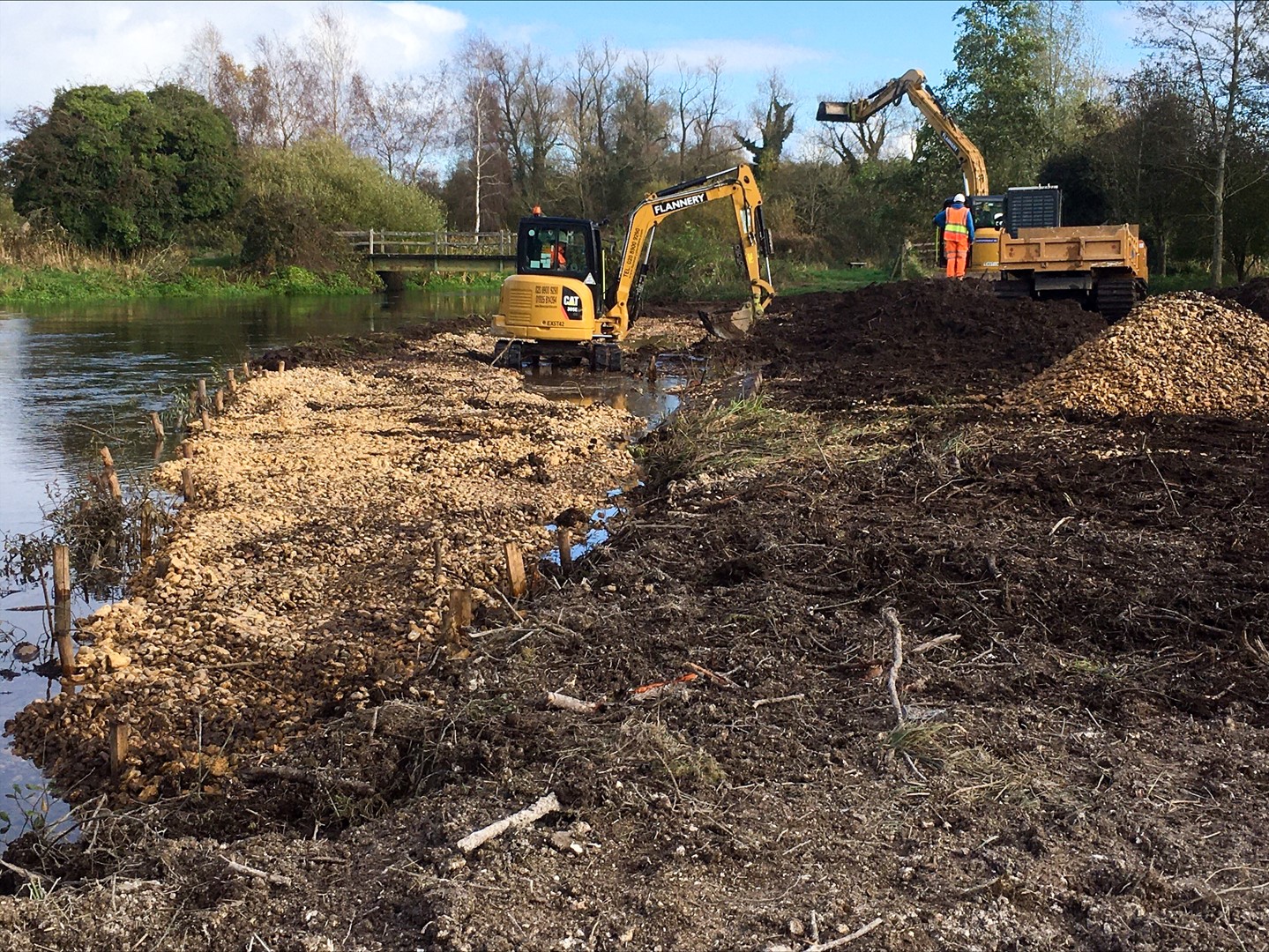
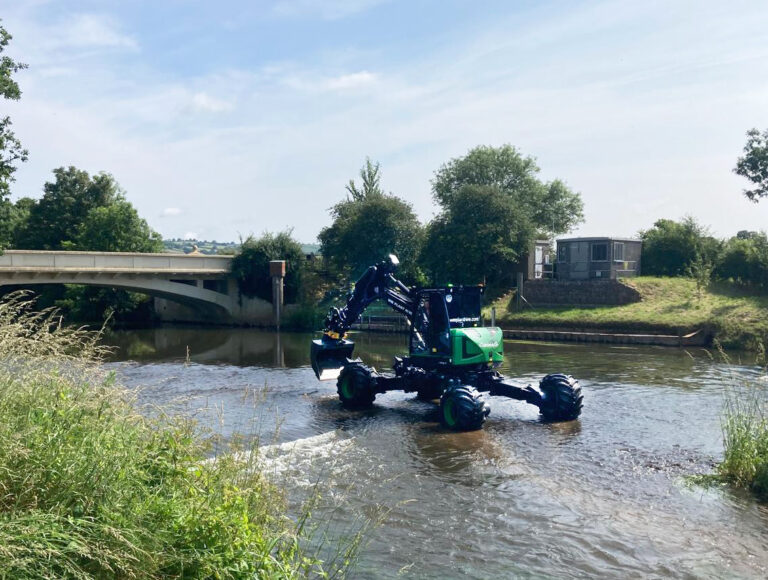
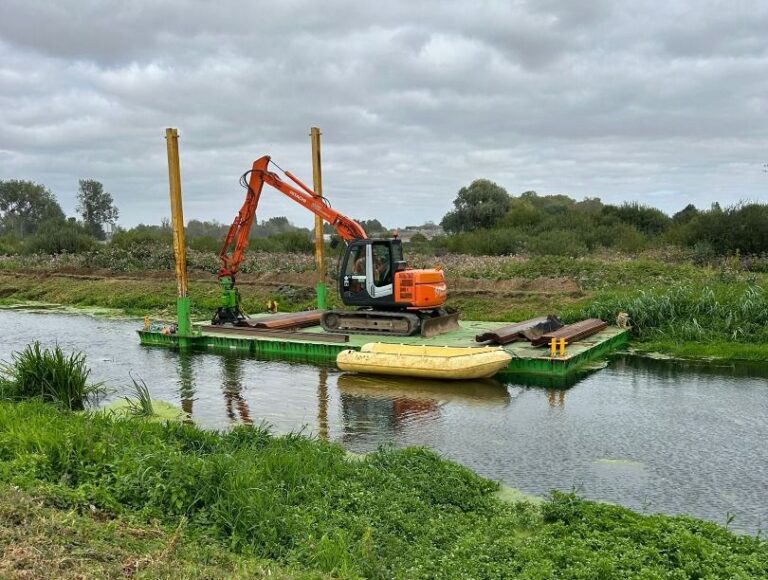
Once the team was mobilised to site and safe access had been created, works began with selective pollarding and coppicing of small willows from adjacent non-SSSI flood meadows. This provided woody material to support bank re-profiling, while also creating a thicker lower canopy to enhance habitats for wildlife.
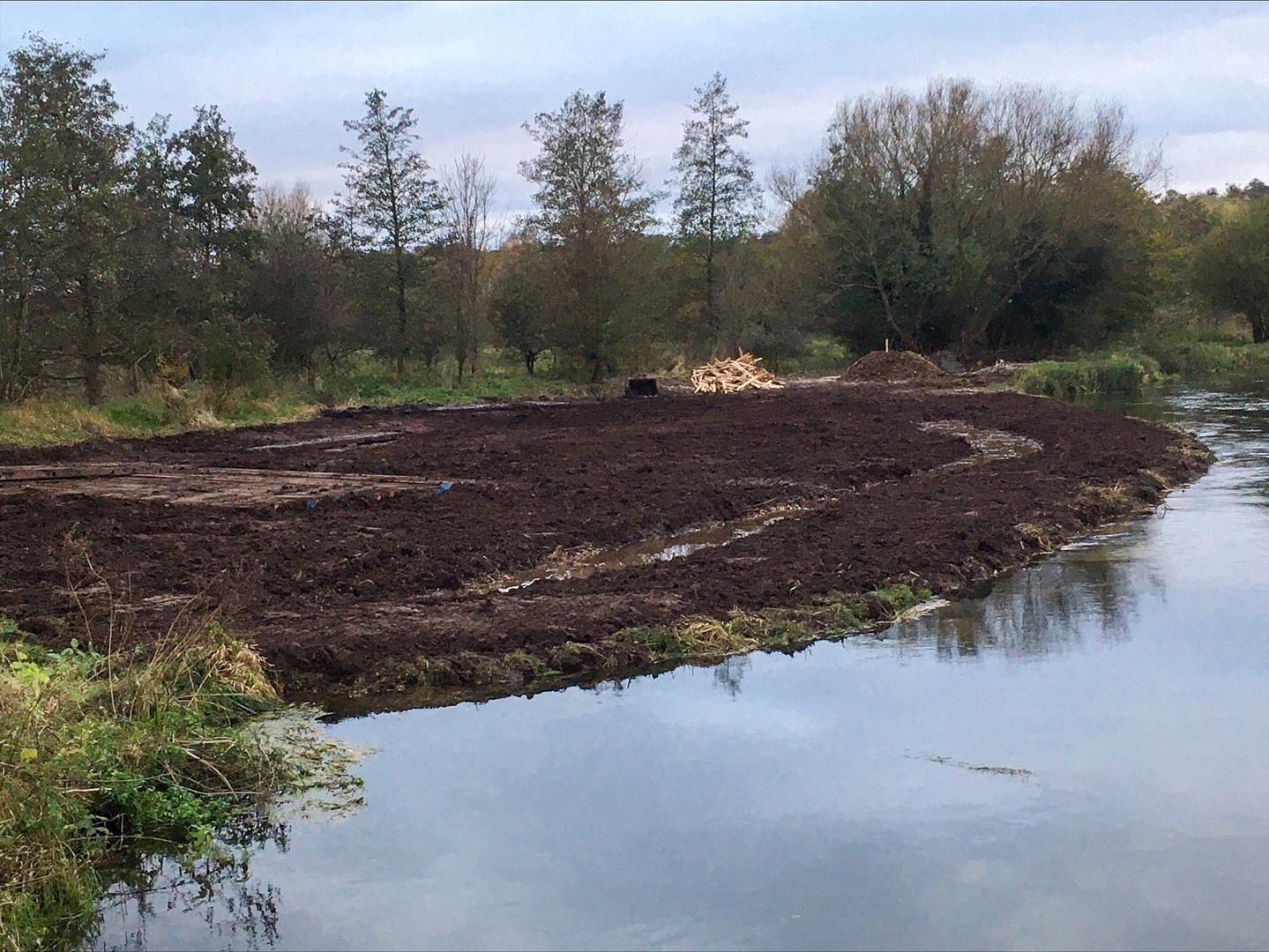
Wetland turfs, soil and gravel were excavated from the same meadows through a series of shallow scrapes. These scrapes formed a network of miniature ponds, increasing biodiversity and providing further habitat opportunities.
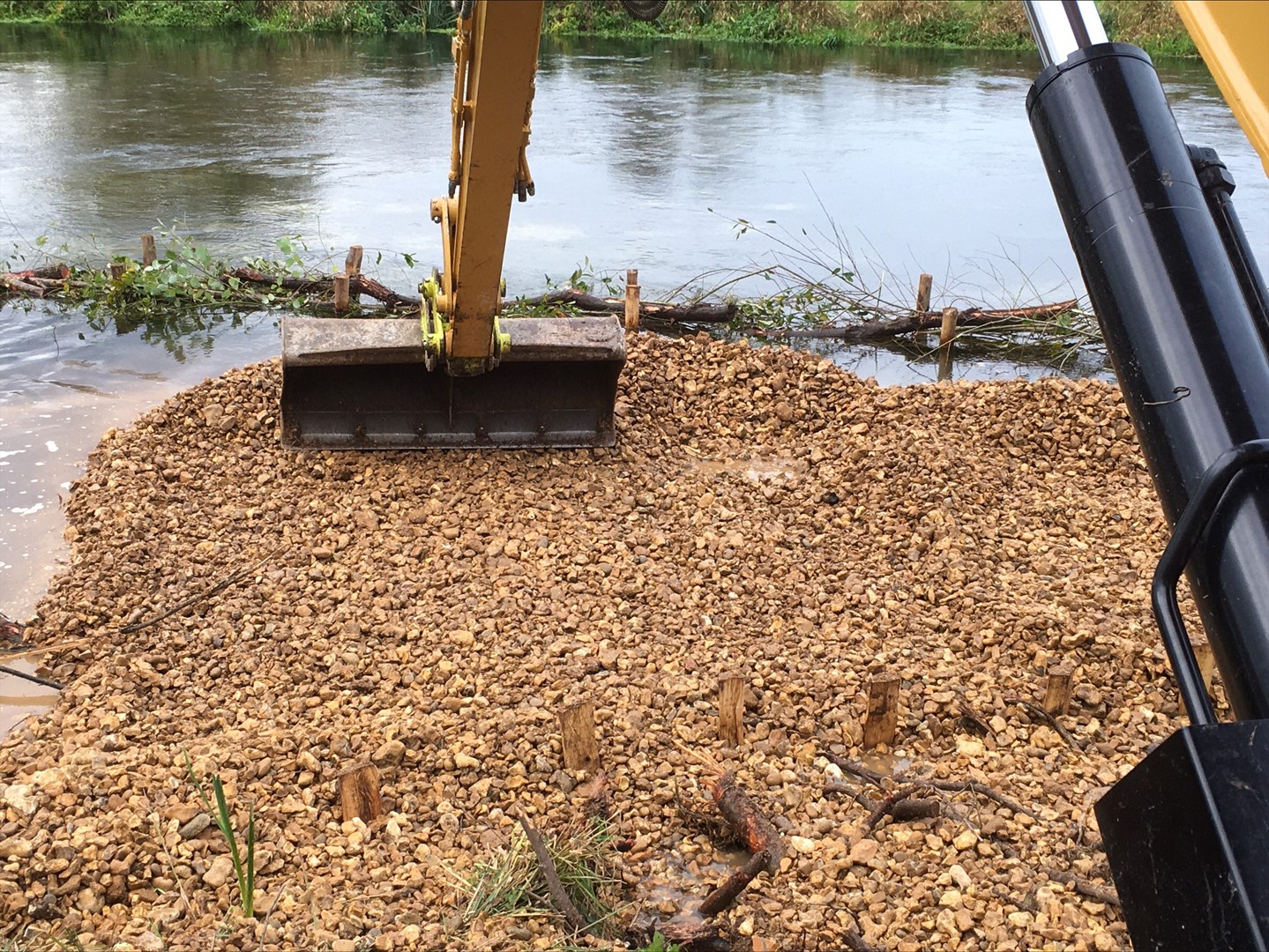
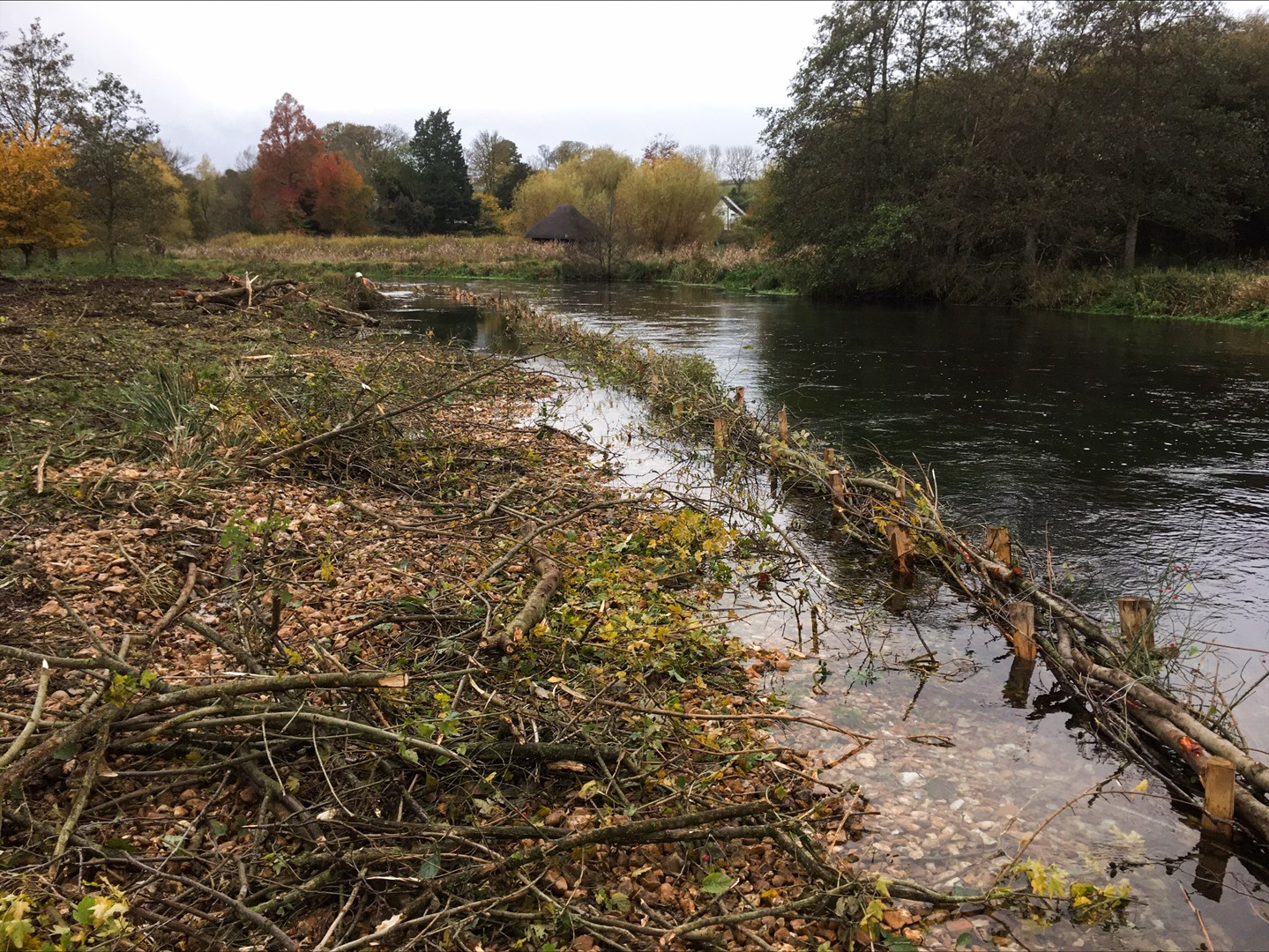
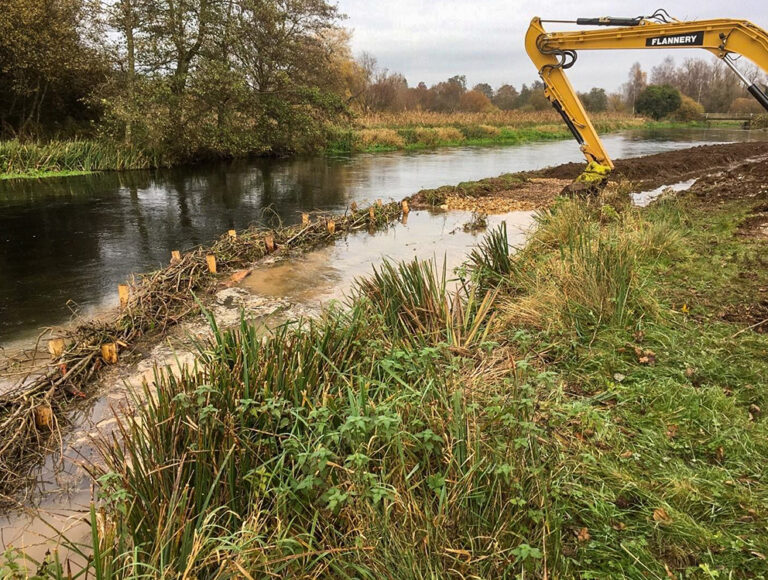
Three marginal berms were then constructed to improve the channel’s planform. Brash and stakes were laid at the berm toes and reinforced with imported washed flint measuring 40–75mm, topped with locally sourced grit and topsoil.
Over 4,500 square metres of material was moved during the works.
The channel was narrowed from 15–20 metres down to 7–9 metres, with new bends introduced to create a more natural form and varied flows. This levelled the riverbed and created abundant habitat for plants and wildlife, while also increasing resilience to both flood and drought.
Angler access was retained throughout, ensuring the river could continue to be used for recreation alongside its ecological improvements.
The benefits

- Restores natural chalk stream morphology with varied flows
- Enhances biodiversity by improving habitats for vegetation, fish and wildlife
- Increases resilience to flood and drought conditions
- Maintains access for anglers alongside ecological gains